—
Jahi Chikwendiu/The Washington Post via Getty Images
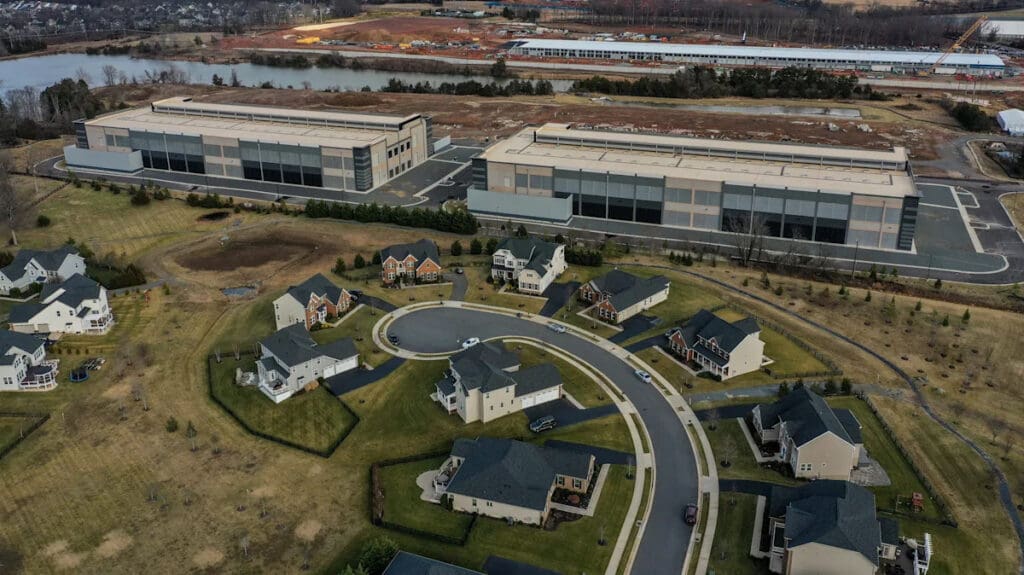
It sounds like an offer that the 143 homeowners in The Regency, a Virginia housing community, couldn’t refuse: a roughly $4.4 million payout to sell their houses to a data center developer (1).
The $500 million-plus deal sounds even better when you consider that the average value of a home in Ashburn, where the community resides, is just over $800,000 (2). Not to mention that Ashburn is part of Loudoun County, dubbed “Data Center Alley” for its more than 250 data centers (3) — the largest concentration of the humming, energy-guzzling AI servers and storage facilities in the world — many of which border the Regency community (4).
Must Read
Yet, for a variety of reasons, some residents aren’t on board with the idea. And without all 143 households in favor, the deal doesn’t work.
But that hasn’t deterred Mital Gandhi — Regency resident, real estate developer and architect of the deal that began in 2024 — who told Moneywise that “the opportunity is very much alive” but described it as a “community transformation” that’s much more complicated than a typical real estate transaction.
“My philosophy has always been the same: The best deals are the ones where everybody wins — the community, the developer and the government,” Gandhi added. “If you can’t engineer that outcome, you need to rethink the deal.”
Balancing community concerns and a $500 million deal
Gandhi’s motive for proposing the deal with the unnamed developer is to, as a Business Insider profile put it, “find a way to capitalize” on the data center “invasion” that’s happening anyway (1). As he told the outlet, “It’s nice to be a part of the boom instead of being left behind.”
Gandhi also admitted in the profile that his wife thought the idea was crazy. And while some residents support his push for the deal, many oppose it on grounds related to everything from wanting their kids to finish school first to fear of losing out on long-term home equity to simply having no desire to see more of the community bulldozed.
“I’ve spent two years understanding 143 different sets of fears, hopes, family histories and financial situations,” Gandhi explained to Moneywise. “What looks like an obvious, life-changing opportunity to one person is terrifying to another — and both responses are completely legitimate.”
Changing local zoning laws — a years-long process — poses another roadblock. For example, Phyllis Randall, the Board Chair of Loudoun County, already stated that she “cannot even slightly imagine” voting to approve a mixed-use or standalone data center development there (5).
Read More: BlackRock warns buying and holding the S&P 500 isn’t enough for retirement anymore — here’s why
Still, Gandhi’s approach to local data center development remains novel among community organizers who usually opt for opposition. Last year alone, grassroots coalitions stopped or stalled $152 billion in potential data center developments, according to Data Center Watch (6).
And Regency residents wouldn’t be the first to turn down a big money data center offer. A Kentucky mother and daughter rejected $26 million for their family farms (7), while a Pennsylvania farmer said no to $15 million for his land (8), among other holdouts across the country.
So far, Gandhi says he’s “personally negotiated better sound buffering, enhanced landscaping requirements and materially improved fiber easement payments” for the community — real wins, he noted, but not the final goal.
Yet if the deal ultimately fails, he feels that those still enduring the noise and light pollution “and the transformation of their communities” via data centers should see more direct benefits from the tax revenue they generate. Loudoun County, for example, projects 2027 data center tax revenue to hit $1.3 billion (3).
As such, a model like Alaska’s Permanent Fund, which invests portions of the billions in mining and oil revenues and pays it back to residents, appeals to Gandhi (9).
“If your neighborhood is powering the AI economy,” he adds, “you should have a stake in the returns.”
Lessons learned
Gandhi learned a few important lessons about organizing during this years-long process, and he offers three tips for others who might want to cut a deal with developers in their own communities.
First, “get organized before you get emotional,” he says, because “the emotions are coming regardless.” He noted that neighbors and residents are going to have deep-seated feelings when it comes to such a proposal, and that you have to be prepared.
“I carried a lot of that weight personally to present a multi-million dollar opportunity to the homeowners.”
Second, “be educated,” because this isn’t a simple real estate deal. “You are negotiating at the intersection of real estate, infrastructure policy, national security and generational wealth,” he says, adding that “communities need to show up informed and serious, not reactive.”
And third, while Gandhi admits he loves a great deal, “to get a great deal, you have to be reasonable. That’s not a weakness. That’s the whole game.” He adds that the AI boom “is restructuring American communities in real time” while offering one last bit of advice to homeowners:
“Don’t just live next to the boom — understand it, organize around it and demand your seat at the table.”
You May Also Like
Join 250,000+ readers and get Moneywise’s best stories and exclusive interviews first — clear insights curated and delivered weekly. Subscribe now.
Article Sources
We rely only on vetted sources and credible third-party reporting. For details, see our ethics and guidelines.
Business Insider (1); Zillow (2); Loudoun County Government (3); NBC Washington (4); DC News Now (5); Data Center Watch (6); YouTube (7); People (8); Alaska Permanent Fund Corporation (9).
This article originally appeared on Moneywise.com under the title: A Virginia man struck a deal to get homeowners a big payout in a $500M data center deal, but not everyone wants to sell
This article provides information only and should not be construed as advice. It is provided without warranty of any kind.