With just one month until voters decide the fate of Virginia’s congressional districts, a stark fundraising gap is emerging between the groups.
—
Va. (WSET) — With just one month until voters decide the fate of Virginia’s congressional districts, a stark fundraising gap is emerging between the groups trying to influence the outcome.
According to the Virginia Public Access Project, the pro-redistricting group “Virginians for Fair Elections” has raised more than $27 million. In contrast, the group opposing redistricting, “Virginians for Fair Maps,” has brought in just under $500,000.
READ MORE: Early voting underway in Virginia as redistricting groups report $22M vs $495K raised
Political analysts say the disparity reflects a familiar trend in competitive, high-stakes races.
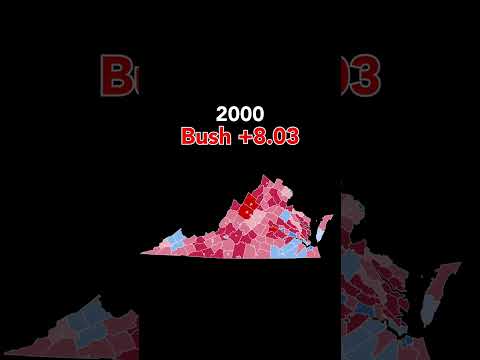
VA Democrats’ redistricting map proposal (WSET)
“This isn’t the first time we’re seeing this sort of funding gap,” said David Richards, chair of political science at the University of Lynchburg.
“We did see this in the governor’s race, where Spanberger out-raised Sears tremendously. And we’re seeing the same pattern again. So in my mind, that tells me the national Republican Party either isn’t concerned, they don’t think that they’re gonna lose here, or they sort of don’t care, they’ve kind of given up, there’s no way they can win. So they’re just not gonna waste money.”
He pointed to fundraising differences between Abigail Spanberger and Winsome Sears in the state’s recent gubernatorial race.
A large share of the money backing redistricting efforts is coming from outside Virginia. More than $21 million has originated from Washington, D.C., according to campaign finance data. Additional contributions include $5 million from New York, $25,000 from Massachusetts and $10,000 from California.
While that may raise questions in a Virginia-only election, Richards said outside spending is common when broader political control is at stake.
“You know this is pretty common, it’s pretty typical, especially with an issue like this that kind of has national repercussions, you’re gonna get outside money,” he said. “I tell my students this: if you learn nothing else, money is power. And so, people will spend money if they think it will get them power.”
That power, he said, could ultimately translate into control of the U.S. House of Representatives.
Even so, Richards emphasized that money alone is unlikely to decide the outcome.
“So the way the Republicans can win, or the Democrats for that matter, is to get out their party faithfuls, to get out their base. Because this is not gonna be the kind of election where the random person who doesn’t care is gonna go vote.”
With turnout expected to be low, he said, the side that best inspires its base to vote will likely claim victory.